2046 / A change in capability
The changes of 2046 transformed common references and accelerated the development of advanced general-purpose AI. Public institutions and operators needed to reconcile their records while adopting intelligence capable of working across disciplines. Turning that capability into physical equipment remained an engineering problem.
2049 / Twenty46 is formed
Observing-network, control-system and transport suppliers combined in Arlington to form Twenty46. The company brought engineering models, industrial machines and operating services into a common organization. Its first work focused on networks already in use: instruments, communications, controls and station maintenance.
Autonomous production
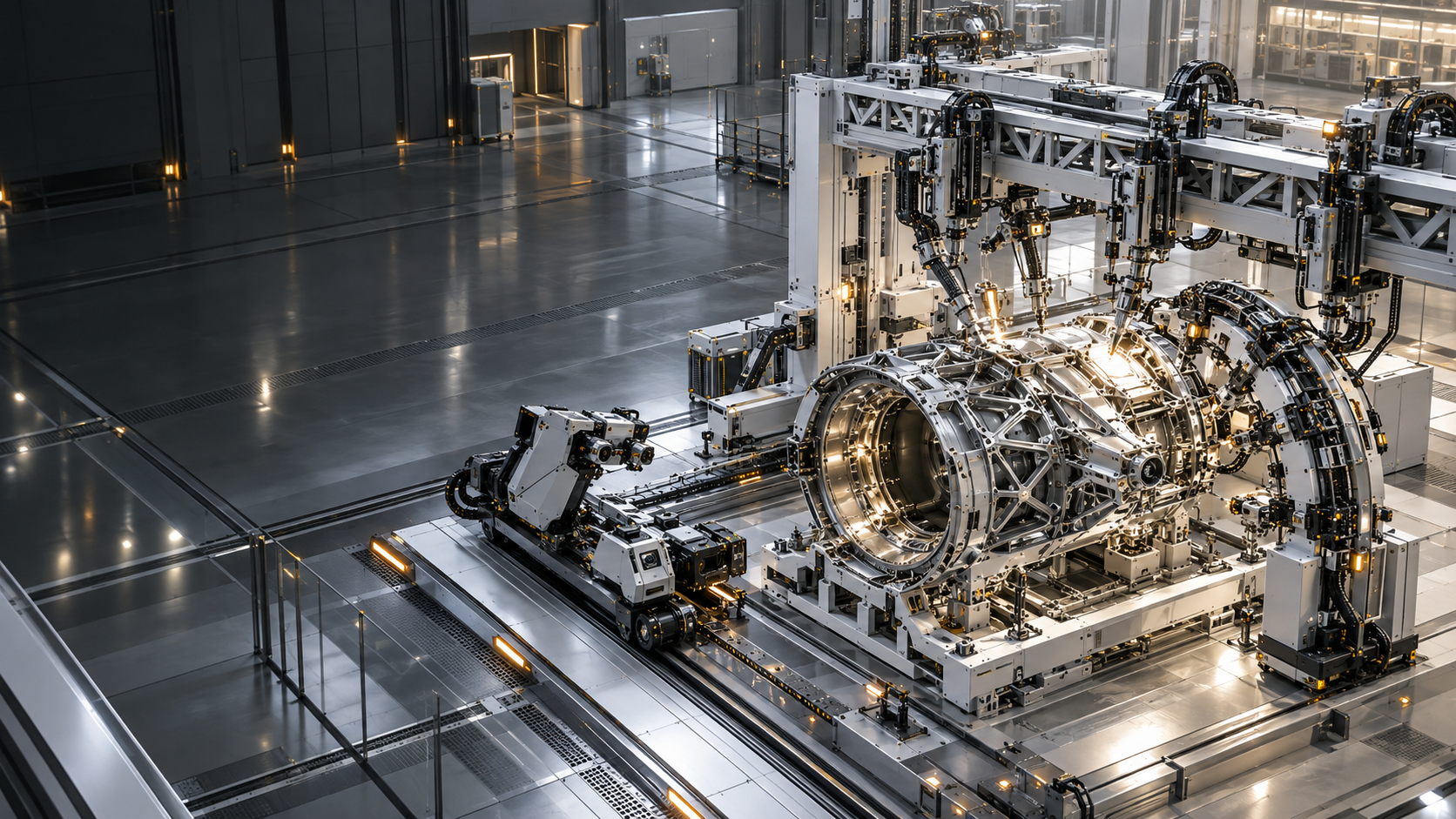
Purpose-built robotic work cells replaced manual assembly and inspection. The important transition was coordination: design changes, material flow, machine access and acceptance evidence had to stay connected. Continuum developed as the company’s industrial orchestration system.
A wider operating portfolio
Autonomous engineering and service expanded across flight platforms, crew vehicles, cargo systems and power infrastructure. Each business area retained its own qualification requirements. Shared intelligence did not make the operating environments interchangeable.
Current operations
Twenty46 supplies systems and autonomous operating services across multiple industries. Human leadership governs commercial commitments and programme purpose; AI and robotics perform the engineering, manufacturing, maintenance and logistics.
The record behind the work
The company catalogue retains engineering publications and supplier guidance under their original document identities. Earlier revisions remain part of the history of a system; they are not automatically the instructions for its current configuration.